

Underarm Sweating Hyperhidrosis Newtox in Buffalo
Excessive underarm sweating can be frustrating, uncomfortable, and difficult to manage with everyday antiperspirants. Newtox treatment can be used to temporarily reduce excessive sweating in the underarms by targeting the nerve signals responsible for sweat production
What Is Underarm Hyperhidrosis?
Hyperhidrosis is a condition characterized by excessive sweating that can occur even when the body does not need to cool down.
When excessive sweating primarily affects the underarms, it is commonly referred to as axillary hyperhidrosis.
It can lead to:
- Visible sweat patches
- Frequent clothing changes
- Skin irritation or discomfort
- Difficulty wearing certain fabrics
- Embarrassment or self-consciousness
- Disruption to work and social activities
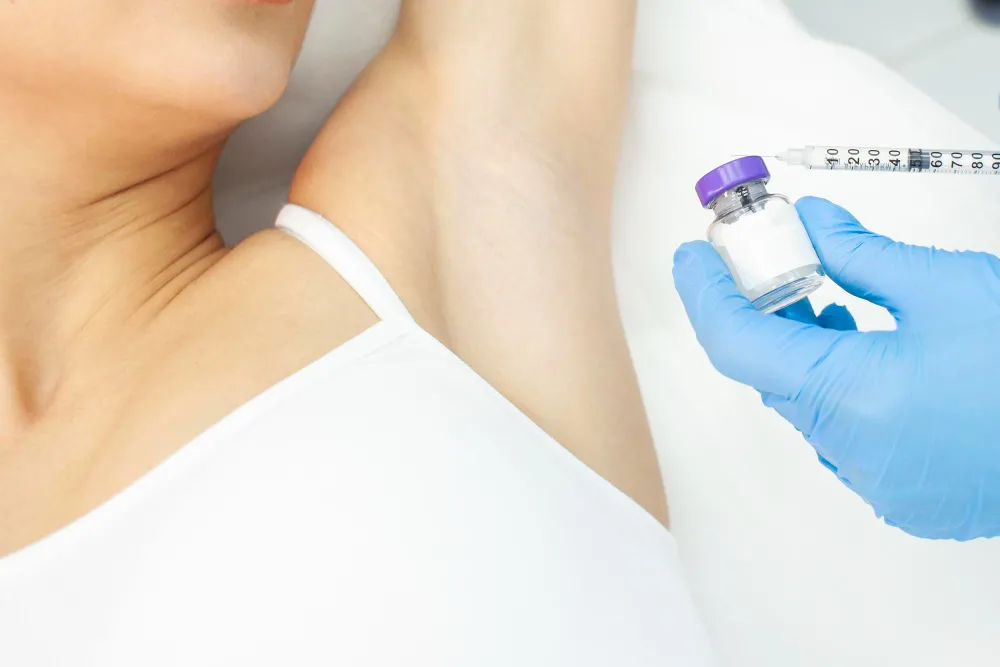
Newtox is a botulinum toxin treatment that can temporarily reduce excessive sweating in targeted areas.
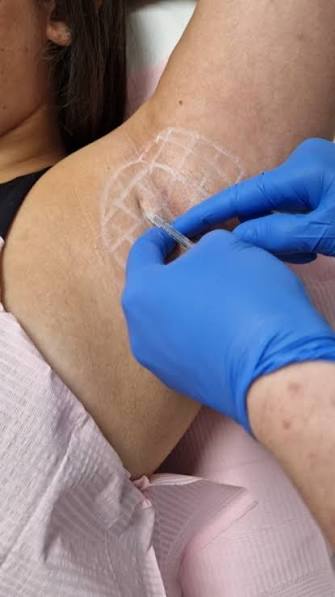
When injected into the underarm area, it works by reducing the nerve signals that stimulate the sweat glands. This can reduce sweat production in the treated area.
Your practitioner will assess your symptoms and suitability before recommending treatment.
Why Choose Newtox for Hyperhidrosis?
Reduced Underarm Sweating
Newtox can temporarily reduce excessive sweating in the treated underarm area.
Greater Everyday Comfort
Less sweating can make everyday activities and clothing choices more comfortable.
Increased Confidence
Reducing visible sweat may help you feel more comfortable in professional, social, and personal situations.
Targeted Treatment
Treatment is focused specifically on the underarm area.
Personalized Approach
Your practitioner can assess the severity and pattern of your sweating before developing an appropriate treatment plan.
Find the nearest medspa locations to book a Underarm Hyperhidrosis TREATMENT in Buffalo
(716) 617-8487
WHO IS IT FOR?
Newtox may be considered for adults experiencing:
- Excessive underarm sweating
- Frequent or noticeable sweat patches
- Sweating that occurs even when you are not physically active
- Sweating that affects clothing choices
- Sweating that interferes with work or social activities
- Persistent underarm sweating despite using antiperspirants
Treatment suitability varies between individuals. A consultation with a qualified practitioner is recommended.
What Can Excessive Sweating Affect?
Underarm hyperhidrosis can affect more than just your clothes.
Clothing : Constant sweat marks may make you avoid certain colors, fabrics, or outfits.
Work : Excessive sweating can become distracting or uncomfortable during meetings, presentations, or close-contact situations.
Social Life : You may feel self-conscious about visible sweat or worry about body odor.
Confidence : Managing excessive sweating can become a daily concern.
Effective treatment may help reduce the impact of excessive underarm sweating on your everyday life.
Your Hyperhidrosis Newtox Treatment Journey
01 — Consultation
Discuss your sweating concerns, medical history, previous treatments, and how hyperhidrosis affects your daily life.
02 — Assessment
Your practitioner assesses the treatment area and determines whether Newtox is appropriate for you.
03 — Personalized Treatment
Newtox is administered to selected areas of the underarm by a qualified practitioner.
04 — Aftercare
You’ll receive personalized guidance following treatment.
05 — Review
Your practitioner can advise when to review your treatment and discuss future options if appropriate.
Ready to Sweat Less & Feel More Confident
$395/SIDE
If excessive underarm sweating is affecting your clothing, comfort, confidence, or everyday life, Newtox may be an option worth exploring. Take the first step toward managing excessive sweating with a personalized consultation.
What Our PatientsHave to Say


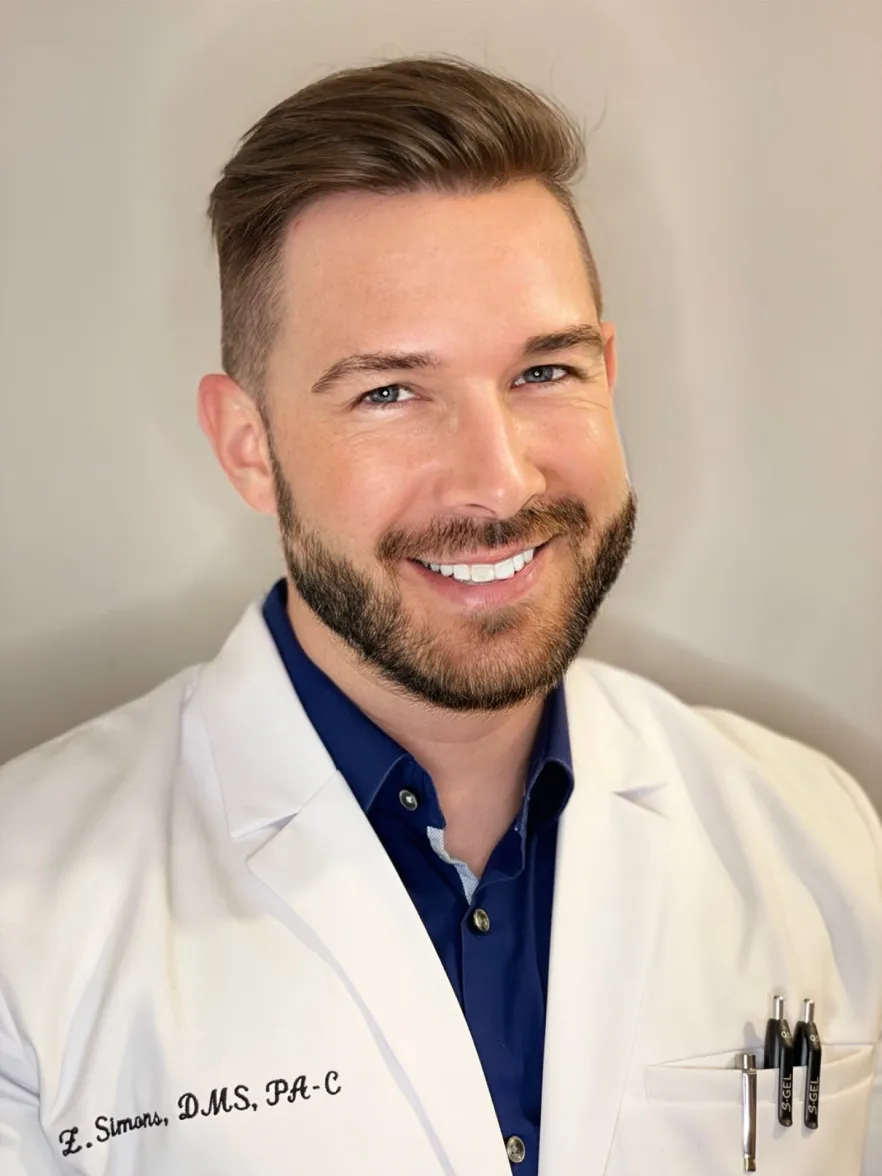
Zachary Simons, DMS, PA-C
I’m Zach, a proud Buffalo, NY native and a dedicated dermatology Physician Associate. My journey in medicine began at SUNY University at Buffalo, where I earned my bachelor’s degree in Chemistry and Pre-Medicine in 2015. I went on to earn my Master of Physician Assistant Studies from D’Youville University in 2021 and my Doctor of Medical Science from Butler University in 2022.
With extensive experience in dermatology, I have developed expertise in both medical and cosmetic care, including neurotoxin and filler injections and a variety of cosmetic procedures. My doctoral research focused on the efficacy and application of handheld high-frequency point-of-care ultrasonography for pre-interventional planning of resectable malignant melanoma, further strengthening my commitment to evidence-based patient care.
I am board certified by the NCCPA and licensed in New York State, with active involvement in the AAPA, SDPA, and PAEA. I strive to provide every patient with competent, compassionate, and personalized care while prioritizing safety and well-being. I look forward to building lasting relationships with my patients and helping them feel confident in their care.
Frequently Asked Questions Underarm Hyperhidrosis
What is underarm hyperhidrosis?
Underarm hyperhidrosis, also called axillary hyperhidrosis, is excessive sweating that primarily affects the underarm area.
How does Newtox reduce sweating?
Newtox temporarily blocks the nerve signals that stimulate sweat glands in the treated area, reducing sweat production.
How long does treatment take?
Treatment time varies depending on the individual and treatment area. Your practitioner can explain the process during your consultation.
When will I notice a reduction in sweating?
The timing varies between individuals. Your practitioner can explain when you can expect changes following treatment.
How long does the treatment last?
The effects are temporary and vary from person to person. Your practitioner can discuss expected duration and future treatment options.
Is Newtox suitable for everyone with hyperhidrosis?
No. Your practitioner will consider your medical history, symptoms, medications, and individual circumstances before recommending treatment.
Can hyperhidrosis be caused by another medical condition?
Yes. Excessive sweating can sometimes be associated with medications or underlying medical conditions. If your sweating is sudden, unexplained, or significantly different from usual, seek appropriate medical advice.